10 Tips for Choosing the Right Centrifugal Fan?
A Centrifugal Fan can look straightforward on a catalog page: airflow, pressure, motor power, and a compact product photo. Real installations are less tidy. A dusty workshop, a long duct run, or a sharp elbow can change the resistance the fan must overcome. A model chosen by airflow alone may miss the operating point—or draw more power than expected.
Frank P. Bleier, author of Fan Handbook: Selection, Application, and Design, is a recognized authority on fan engineering. Drawing on his system-based approach, this guide uses a practical selection rule: “Choose for the system, not the catalog headline.” This is an editorial summary, not a verbatim quotation. The distinction matters. Reliable advice should not dress a paraphrase as a sourced quote.
The ten tips ahead examine the details that shape a sound choice: required airflow, static pressure, fan curve, efficiency, noise, installation space, materials, controls, maintenance access, and total operating cost. Picture a fan above a production line, moving warm air through a narrow duct with two bends. Its label alone cannot tell you how it will perform there. Measurements and operating conditions can. Some projects still involve compromises; lower noise, smaller size, and lower energy use do not always align neatly. That deserves a second look. Use the checks that follow to compare options, ask suppliers specific questions, and confirm the design against real system data before purchase.
Understanding Centrifugal Fan Design and Operating Principles
10 Tips for Choosing the Right Centrifugal Fan
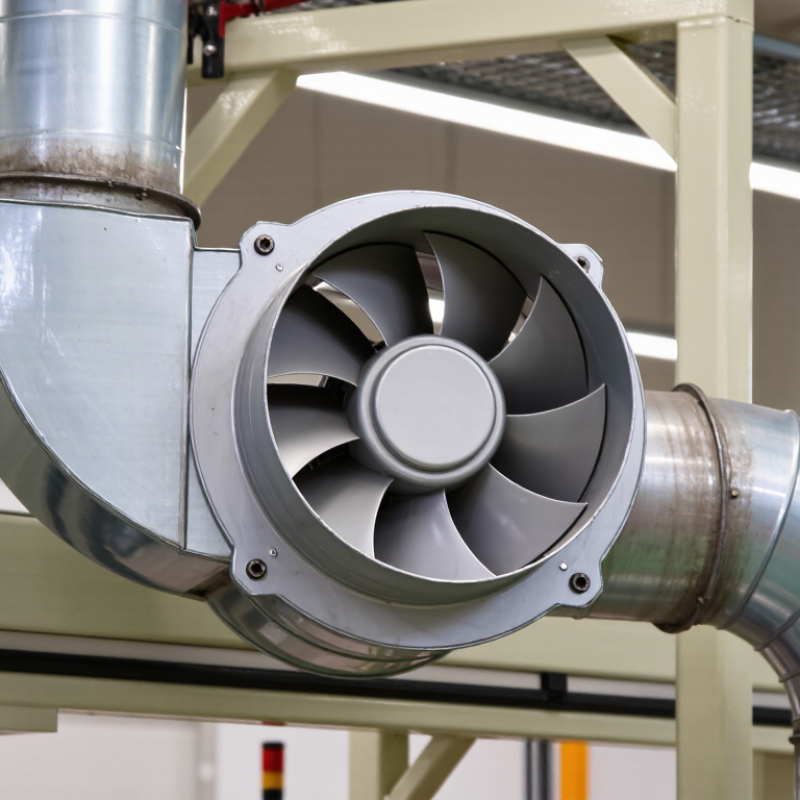
Understanding the fan’s design helps explain how it performs. Air enters near the impeller’s center, then rotating blades move it outward. The casing collects this air and guides it toward the outlet. This movement converts energy from the motor into airflow and pressure. The exact result depends on blade shape, speed, and the resistance of connected ducts. Small details matter.
A fan curve shows the relationship between airflow and pressure. Compare it with the system’s expected resistance, rather than choosing by airflow alone. Dusty filters, tight bends, and long ducts can reduce delivered flow. Measure air density and operating temperature, too, especially when conditions differ from standard ratings. A calculation is useful, but it can miss real-world losses. Check assumptions before selecting equipment.
Tips: Define the required airflow and pressure first. Review the fan curve at the intended operating point, and leave sensible allowance for filter loading. Match materials to the air being moved. Check motor capacity, noise limits, access for cleaning, and vibration during commissioning. Keep the inlet clear. If readings differ from predictions, inspect the duct layout before changing fan speed; the model may be imperfect, but so may the installation.
Defining Airflow, Pressure, and System Requirements
Choosing a centrifugal fan starts with the air the system actually needs to move. Estimate airflow from room volume, process demand, or equipment data, then confirm it under expected operating conditions. A nameplate value alone can mislead. A fan rated for 2,000 cubic feet per minute may deliver less once connected to restrictive ductwork.
Pressure matters just as much. Add the resistance from ducts, elbows, dampers, filters, grilles, and any equipment in the airflow path. Use the same pressure units throughout, such as pascals or inches of water gauge. Measure it twice. Dirty filters and tight bends can raise resistance over time, so allow for realistic variation rather than sizing to an ideal drawing. A common mistake is choosing a fan by airflow alone, then discovering that it cannot overcome the system pressure. Compare the fan curve with the system curve at the intended operating point. I still find early estimates easy to rush; actual duct dimensions or filter conditions may be uncertain. Record those assumptions, and verify airflow and pressure after installation where practical.
Selecting Fan Configuration, Materials, and Drive Type
10 Tips for Choosing the Right Centrifugal Fan?
Selecting Fan Configuration, Materials, and Drive Type
A centrifugal fan should match the system, not just the airflow target. Forward-curved wheels suit compact, lower-pressure duties; backward-curved designs often handle higher pressure more efficiently. For dusty or fibrous air, a radial-blade wheel may resist buildup better. Check the full operating range, including startup and peak demand. Small details matter.
Materials need to reflect the air’s temperature, moisture, and contaminants. Stainless steel may suit corrosive conditions, while coated carbon steel can work in less aggressive environments. Confirm temperature limits for the wheel, shaft, bearings, and seals—not just the casing. I admit, material selection can seem dull beside motor sizing. It is not. The wrong choice can mean early wear or unplanned maintenance.
Drive type shapes efficiency and control. Direct drive is compact and avoids belt losses; belt drive allows speed changes through pulley adjustment, but needs tension checks. Variable-speed drives can help when demand changes, though motor compatibility and cooling require review. The U.S. Department of Energy’s Improving Fan System Performance sourcebook reports that system improvements can deliver fan-energy savings of 20% to 50%. Treat that as potential, not a guarantee. AMCA 210/ASHRAE 51 provides laboratory methods for rating fan aerodynamic performance; compare tested curves at your actual duty point. A small mismatch still matters.
Evaluating Efficiency, Noise, and Operating Conditions
A centrifugal fan should be judged against the system it will serve, not its catalog maximum.
Start with the required airflow and static pressure, then compare the duty point with the fan curve. Operating near the best-efficiency region usually reduces wasted power and heat. A larger model is not automatically safer. Excess capacity can require throttling and add avoidable noise. If demand changes, check whether speed control can maintain airflow without pushing the motor beyond its limits. Small details matter.
Noise figures need context: ask how they were measured, and at what airflow, pressure, and distance. In a real installation, sharp duct turns, inlet turbulence, loose panels, and vibration can make the fan louder. Listen at the work area, but use a sound meter when noise levels matter. Acoustic lining may help, though it can increase resistance and complicate cleaning. Check air temperature, dust, moisture, corrosive particles, and altitude before selecting materials and motor ratings.
Operating schedules matter too. Continuous duty, frequent starts, and seasonal changes affect wear and energy use. Record the expected conditions and confirm them after installation; early airflow estimates are often imperfect. That is worth admitting.
Planning Installation, Controls, and Long-Term Maintenance
A centrifugal fan can look correctly sized on paper and still perform poorly after installation. Check the inlet and discharge clearances, support stiffness, and duct transitions before the unit arrives. A tight elbow beside the inlet can disturb airflow; soft or misaligned mounting can add vibration. Leave room to remove the wheel and inspect bearings. Small details matter. Record airflow, static pressure, motor current, and vibration during commissioning. Those readings create a useful baseline, not a guarantee.
Controls should match the real load. A variable-speed drive can reduce energy use when demand changes, but poor sensor placement may cause hunting or weak airflow. The U.S. Department of Energy’s Improving Fan System Performance sourcebook reports that fan-system improvements can often save 20% to 50% of energy. That potential depends on the system, not the drive alone. For maintenance, schedule checks around operating hours and dust exposure. Track bearing temperature, vibration, belt condition, and filter pressure drop. AMCA 204 provides guidance on fan balance quality and vibration levels. Still, a checklist can miss gradual changes; compare readings over time and investigate small shifts before they become obvious.