Leave Your Message

Top 10 Low Noise High Pressure Fans for Buyers

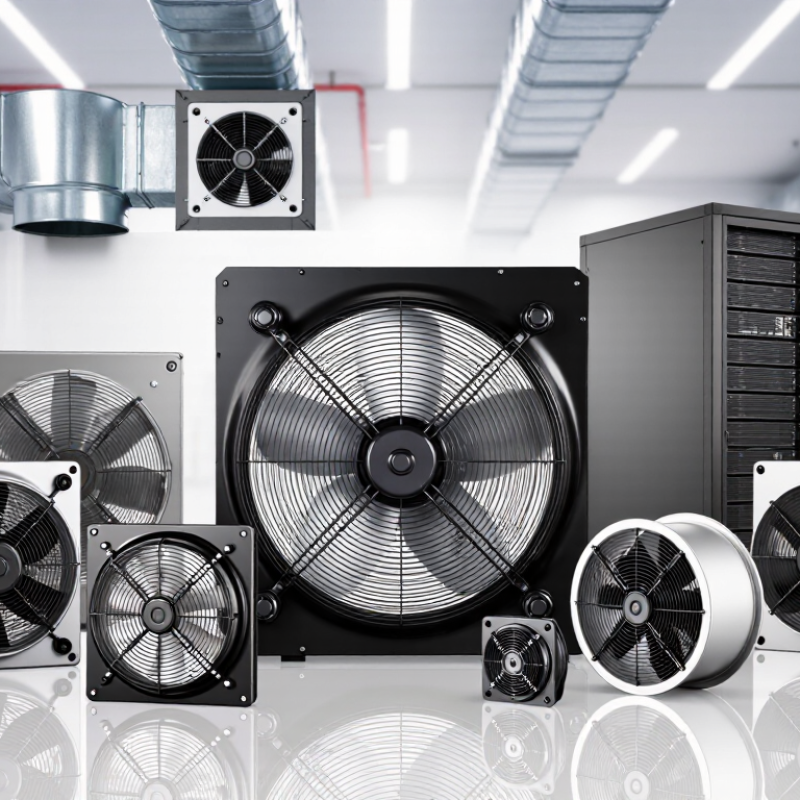
Choosing a Low Noise High-Pressure Fan takes more than comparing decibel ratings. Buyers need dependable airflow against real system resistance, with sound levels measured under comparable operating conditions. A quiet fan on an open test bench may behave differently once connected to narrow ducts, filters, or a crowded enclosure.

This guide draws on established fan-selection principles, including those discussed by Frank P. Bleier, author of Fan Handbook: Selection, Application, and Design. I can’t verify a direct quotation from Bleier on this specific topic, so I won’t invent one. The practical reminder is simple: “Match the fan to the system, not just the specification sheet.” That sentence is editorial guidance, not a quotation attributed to him.

The Top 10 list will help buyers compare pressure capability, airflow, noise data, motor options, and construction details. Look for clear performance curves. Check whether sound figures include test conditions. Consider the installation, too: a sharp duct bend can add turbulence, while vibration can turn a quiet unit into an irritating one. Small details matter.

Not every product will suit every site. A workshop, server room, and ventilation cabinet have different noise limits and airflow demands. Use the shortlist to ask better questions, then confirm the selected model against your operating point and manufacturer data. Ratings alone are not enough.
Top 10 Low Noise High Pressure Fans for Buyers

How Low-Noise High-Pressure Fans Work

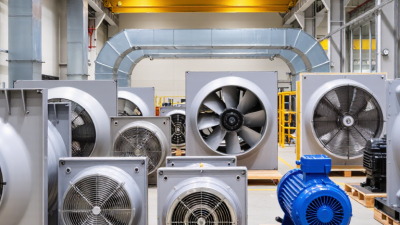
A low-noise, high-pressure fan moves air against resistance without relying on excessive speed alone. Its impeller adds energy to the airflow, while the housing guides that air toward an outlet. Centrifugal designs often use curved blades to build pressure; axial designs move air along the shaft and suit different system layouts. The right choice depends on the duct, filter, and required airflow.

Noise comes from several places. Fast-moving air can hiss at narrow grilles, while turbulence near bends creates a rougher sound. Motor vibration may travel through a metal panel like a small drum. Better blade geometry, balanced rotating parts, and resilient mounts can reduce these sounds. They cannot remove every source. Air still needs a clear path.

A fan’s operating point matters. Add a restrictive filter or a tight duct, and airflow may fall while the sound changes. Measure pressure and airflow in the installed system, not only in an open test setup. I used to think a larger fan would always run quieter. That is not reliably true. A poorly matched unit can create more turbulence, waste energy, and disappoint in a real room.

How Low-Noise High-Pressure Fans Work

This idealized fan curve shows how static pressure generally falls as airflow increases. The plotted values use the illustrative approximation pressure ratio = 1 − (airflow ratio)²; they are not measurements for a specific fan. High-pressure designs overcome airflow resistance, while larger, slower-running impellers, carefully shaped blades, and vibration isolation can help reduce noise.

Key Specifications Buyers Should Compare

Compare fans at the same operating point, not by maximum airflow alone. Record required airflow in cubic feet per minute and static pressure in pascals or inches of water. A high-pressure fan may move less air once ducts, filters, and bends add resistance. Check the performance curve for the duty point, then verify the test basis: ANSI/AMCA 210 and ASHRAE 51 describe standardized methods for measuring fan airflow and pressure. Sound matters too. Compare sound power or sound pressure only when test conditions and distance match; a bare “dBA” figure can mislead.

Check input power at the required duty point, motor speed, enclosure size, and temperature limits. Ask for certified performance data, not only catalog claims. The U.S. Department of Energy’s Improving Fan System Performance: A Sourcebook for Industry reports that many fan systems can achieve energy savings of 20–50% or more through system improvements. That range is not a guarantee for an individual installation, but it supports comparing efficiency alongside pressure and noise. In real rooms, mounting, vibration, and nearby walls can change perceived sound. Specifications cannot capture every installation detail.

Tips: Request airflow, static pressure, power, and noise data for one shared operating point. Check whether acoustic readings include the inlet, outlet, or both. Leave room for uncertainty; field conditions rarely match a clean test bench.

Top 10 Low-Noise High-Pressure Fans at a Glance

Top 10 Low-Noise High-Pressure Fans at a Glance

A useful shortlist compares ten fan configurations by operating point, sound data, and installation needs—not by maximum pressure alone. Backward-curved and airfoil centrifugal fans often suit demanding duct systems; forward-curved designs can fit compact spaces. Plug fans simplify plenum installation, while mixed-flow and tubular axial types balance pressure with a smaller footprint. Vane-axial fans can move substantial air through straight ducts. Regenerative fans offer high pressure in compact packages, but may produce more tonal noise. Dual-inlet and electronically controlled centrifugal designs offer other layout and speed-control options. Trade-offs matter.

The U.S. Department of Energy’s Improving Fan System Performance sourcebook recommends assessing the complete fan system, including airflow, pressure, and power at real operating conditions. That is more useful than comparing catalog peak values. For noise, AMCA Publication 300 describes standardized fan sound testing, including octave-band sound-power data. Ask whether quoted figures use the same test method and operating point. A 5 dB difference can be noticeable, but installation, duct turbulence, and nearby surfaces can change what people hear. Check the actual duty point. One imperfect detail: published figures may not predict a quiet room perfectly. Use them to screen candidates, then verify performance in the intended setup.

Best Fan Options for Different Applications

Top 10 Low Noise High Pressure Fans for Buyers

Best Fan Options for Different Applications

Choosing a fan starts with the system, not the product ranking. For long ducts, dense filters, or small outlets, backward-curved centrifugal fans can provide useful pressure without relying on excessive speed. A mixed-flow inline fan may suit a compact ventilation route with several bends. For larger air-handling units, an airfoil centrifugal design can move substantial air efficiently, provided the casing and inlet are well matched. The U.S. Department of Energy’s Improving Fan System Performance sourcebook reports that fans use about 7% of electricity in U.S. manufacturing. That makes efficient sizing a practical cost decision.

Noise needs context. A fan’s catalog sound level may not predict what workers hear beside a reflective wall or vibrating duct. NIOSH recommends limiting occupational noise exposure to 85 dBA over an eight-hour time-weighted average. This is a workplace exposure guideline, not a target for every fan installation. Ask suppliers for sound data at the required airflow and pressure, then check the measurement method. Small detail. It matters.

For cleanroom supply or quiet offices, prioritize stable airflow, vibration isolation, and a generous duct cross-section. For workshops with dust-laden air, a robust radial-blade centrifugal fan may tolerate harsher service, though it can be louder. I would not choose on sound level alone; pressure loss, maintenance access, and actual operating speed matter too. One common mistake is selecting a high-pressure model, then throttling it with a damper. Measure the installed system, because the “quietest” choice on paper may disappoint in the room.

Top 10 Low Noise High Pressure Fans for Buyers - Best Fan Options for Different Applications

No. Fan option Indicative static-pressure range Indicative sound level Suitable applications Buyer considerations
1 Airfoil centrifugal fan Approx. 1–8 in. w.g. (250–2,000 Pa) Approx. 55–80 dBA Air-handling units, commercial HVAC, and duct systems with substantial resistance Efficient at suitable operating points; select a properly sized wheel and avoid operation far from the fan curve’s efficient region.
2 Backward-curved centrifugal fan Approx. 1–6 in. w.g. (250–1,500 Pa) Approx. 50–80 dBA Building ventilation, filtration systems, and process-air supply Often a good efficiency and pressure balance; check the system curve, motor loading, and required airflow.
3 Radial-blade centrifugal fan Approx. 2–10 in. w.g. (500–2,500 Pa) Approx. 60–90 dBA Dust collection, material handling, and air streams with heavier particulate loads Robust construction can suit demanding service; abrasion, imbalance, and cleaning needs may affect noise and maintenance.
4 Forward-curved centrifugal fan Approx. 0.5–3 in. w.g. (125–750 Pa) Approx. 45–75 dBA Compact HVAC units, furnace circulation, and lower-to-moderate-pressure ductwork Compact and capable of moving useful airflow at low speeds; check motor load carefully as airflow changes.
5 Plenum (plug) fan Approx. 1–5 in. w.g. (250–1,250 Pa) Approx. 50–80 dBA Air-handling units, fan arrays, and installations requiring flexible discharge arrangements Can simplify air-handler layouts; inlet conditions, cabinet design, and vibration isolation influence sound levels.
6 Multistage centrifugal fan Approx. 3–15 in. w.g. (750–3,750 Pa) Approx. 65–95 dBA High-resistance process systems, specialized ventilation, and pressure-demanding applications Useful where higher pressure is required; confirm the complete performance curve, power demand, and acoustic treatment needs.
7 Vane-axial fan Approx. 0.5–3 in. w.g. (125–750 Pa) Approx. 55–85 dBA Long duct runs, tunnel ventilation, and systems needing more pressure than a basic axial fan Guide vanes can improve pressure recovery; installation quality and nearby elbows or obstructions affect performance and noise.
8 Tube-axial fan Approx. 0.2–1.5 in. w.g. (50–375 Pa) Approx. 45–80 dBA General duct ventilation, warehouses, and exhaust or supply-air duties with moderate resistance Simple inline arrangement; performance can decline with restrictive ductwork, poor inlet flow, or abrupt transitions.
9 Mixed-flow inline fan Approx. 0.3–2.5 in. w.g. (75–625 Pa) Approx. 40–75 dBA Quiet-room ventilation, residential or commercial inline ducting, and space-constrained installations Often selected for a balance of pressure, compact size, and lower sound; verify performance at the required airflow and system resistance.
10 High-pressure axial fan Approx. 1–4 in. w.g. (250–1,000 Pa) Approx. 60–90 dBA Industrial ventilation, equipment cooling, and applications needing axial airflow against elevated resistance Can provide high airflow in a compact form; check the fan curve and consider silencers or acoustic enclosures where needed.

Note: Pressure and sound figures are indicative ranges for fan types, not guaranteed ratings for a specific model. Actual performance and sound depend on fan size, speed, operating point, installation, ductwork, and measurement conditions. Compare manufacturer performance curves and standardized acoustic data before purchase.

Installation and Maintenance for Quiet, Reliable Performance

A low-noise, high-pressure fan performs best when the installation matches its operating conditions. Check the fan curve against the system’s pressure loss, including filters, bends, and dampers. A fan that is too small may run near its limit, while an oversized unit can waste energy and create avoidable noise. Follow the manufacturer’s clearance and orientation requirements, and keep the inlet and outlet free from obstructions.

Use a firm, level support and suitable vibration isolators. Flexible connectors can reduce vibration transfer, but they should not carry the fan’s weight. Align ductwork carefully; a tight bend close to the inlet can disrupt airflow and raise sound levels. Secure guards and fasteners before startup, then check for rubbing, unusual vibration, or a change in motor sound. Small details matter. Electrical connections should be handled by a qualified person, with power isolated before inspection.

Set a regular maintenance schedule based on dust levels and operating hours. Clean blades and screens gently, since buildup can unbalance the wheel and reduce airflow. Inspect bearings, mounts, wiring, and duct joints for wear or looseness. Record airflow, pressure, and sound at commissioning; those readings make later changes easier to spot. Listen again. A quiet fan is not automatically a healthy one, and I would not rely on sound alone—measure performance when possible.