Leave Your Message

Where to Buy China Best Environmentally Friendly Fans?

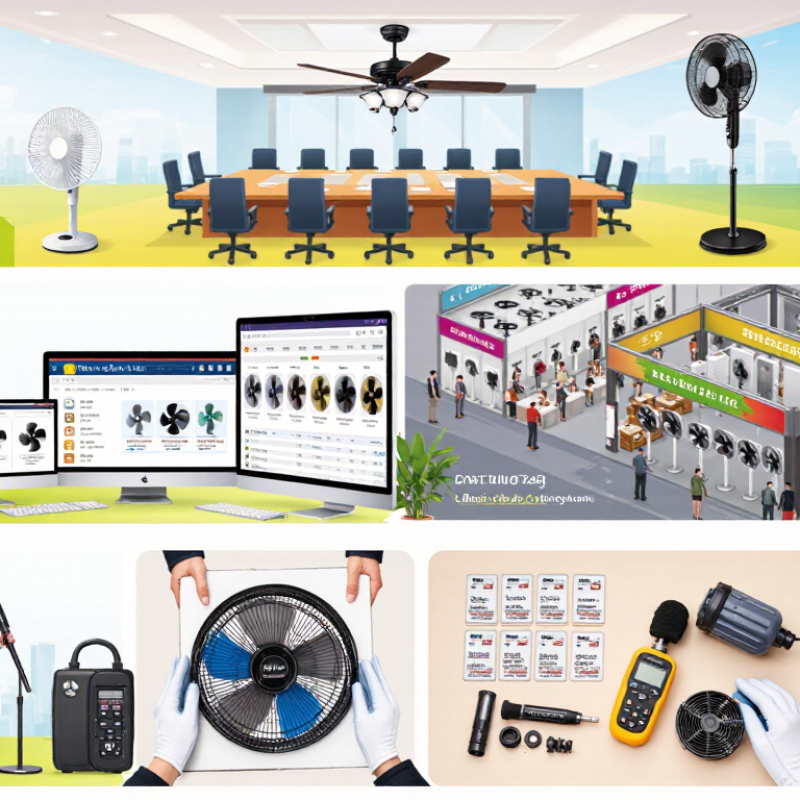
Finding the right source for China’s best Environmentally Friendly Fans starts with defining “best” for your room, climate, and budget. A quiet desk fan, a high-airflow warehouse model, and an efficient ceiling fan need different tests. For a first shortlist, compare established B2B marketplaces, manufacturer websites, and recognized trade fairs such as the Canton Fair. These channels help you discover suppliers; they do not guarantee quality. Check business details, product specifications, export experience, and whether the listed factory actually makes the fan. Small checks matter. Ask for measured airflow, power consumption, noise data, material details, and applicable test reports for the exact model. Where available, confirm independent certification with the issuing organization rather than relying on a badge in a catalog. Do not assume a “green” label means low energy use or easy repair. A product can look responsible and still be difficult to service.

Direct sourcing may suit larger orders, while a verified trading company may offer broader model choices and communication support. Request a sample, inspect the motor sound and build, and compare the stated performance with what you can measure. Also clarify minimum order quantities, spare parts, packaging, warranty handling, and delivery terms before paying a deposit. For smaller purchases, check reputable retail platforms and local distributors that identify the manufacturer and provide clear after-sales support. I would be cautious about naming one supplier as “the best”; product quality changes by model and batch. That judgment takes work. A careful comparison usually leads to a safer, more suitable purchase than chasing the lowest quote.
Where to Buy China Best Environmentally Friendly Fans?

What Defines an Environmentally Friendly Fan?

Where to Buy China Best Environmentally Friendly Fans?

What Defines an Environmentally Friendly Fan?

An environmentally friendly fan is not simply one made with recycled plastic. Its main purpose is to move useful air while using less electricity. Compare airflow and power consumption at the same speed setting, when those figures are available. A higher airflow-per-watt figure generally points to better efficiency, but room size and placement also affect comfort. A modest fan may work better in a small bedroom. That matters.

Motor type and speed controls can influence energy use. A fan with several settings lets you choose a gentle breeze instead of running it at full power all evening. Check whether the controls have a standby mode, since small ongoing energy use can add up. Noise is worth considering too, but quiet operation alone does not prove a fan is efficient.

Durability is part of the environmental picture. Look for clear warranty terms, replaceable parts, and instructions for cleaning the blades and grille. Product details should explain how performance was measured; vague claims like “eco” are not enough. I would not judge a fan by one number alone. Testing conditions can differ, and real rooms are imperfect. When comparing suppliers, ask for technical specifications and after-sales support before choosing a model.

What Defines an Environmentally Friendly Fan?

Estimated annual electricity use by fan type, assuming 8 hours of operation per day. Lower energy use can reduce electricity-related emissions.

Illustrative estimates use representative power levels: 30 W for a DC ceiling fan, 35 W for a table fan, 50 W for a pedestal fan, 60 W for an AC ceiling fan, and 75 W for a box fan. Actual consumption varies by model and speed. Compare airflow per watt, operating noise, standby power, durability, and repairability when choosing a fan.

Which Types of Eco-Friendly Fans Are Made in China?

China’s eco-friendly fan range includes several practical designs. Ceiling fans with brushless DC motors can move air while using less electricity than many conventional AC models, though performance depends on motor quality and blade design. They suit bedrooms, offices, and open living spaces. Look for smooth speed control and balanced blades; wobble can signal poor assembly.

Portable table and pedestal fans are another common type. Models with efficient motors, washable grilles, and replaceable parts may last longer and create less waste. Small details matter. A sturdy base and a power cord that reaches the outlet can make daily use easier. Some factories also produce ventilation and exhaust fans for kitchens, workshops, and bathrooms. Their job is different: they remove stale air rather than simply circulate it, so airflow ratings should match the room.

Solar-powered fans are available for some settings, especially sheds or areas with reliable sunlight, but cloudy weather can limit output. Not every model qualifies. “Eco-friendly” can describe a marketing claim, not a verified result. Check measured power use, noise levels, spare-part access, and material information when comparing products. Even a low-energy fan may be a poor long-term choice if its motor cannot be repaired. Conversely, a basic, efficient fan used for years may have a smaller footprint than a feature-heavy model replaced quickly.

Where to Find Chinese Manufacturers and Suppliers?

To find Chinese manufacturers and suppliers of environmentally friendly fans, search regional industrial directories and trade-fair exhibitor lists in Guangdong, Zhejiang, and Jiangsu. Treat listings as leads, not proof. Confirm whether each contact is a factory or a trading company, and request the production address, product catalogue, and recent test reports.

Ask suppliers for measured airflow, power consumption, noise levels, and materials data for the exact model you plan to buy. Check that reports identify the same model and test conditions. A sample can reveal practical details: loose grille fittings, rough plastic edges, or a motor that sounds louder than expected. Small details matter. Specifications alone cannot show how a fan performs after months of use. Ask about spare parts, warranty terms, and batch inspection procedures, then compare quotations on equal specifications.

The market context supports careful efficiency checks. UNEP’s Global Cooling Watch 2023 projects that global cooling capacity could more than triple by 2050 under current trends, with cooling-related emissions more than doubling. The IEA’s Future of Cooling (2018) projected global air-conditioner stock would grow from 1.6 billion units to 5.6 billion by 2050. These are cooling-sector projections, not fan sales forecasts. Use them to frame supplier questions, not to accept broad “green” claims without model-level evidence. Verification takes time. Some suppliers may not provide complete data on the first request.

Where to Buy China Best Environmentally Friendly Fans? - Where to Find Chinese Manufacturers and Suppliers?
Sourcing Area Fan Types to Explore Potential Energy-Saving Features Where to Find Suppliers What to Verify Before Buying
Guangdong
Including Foshan, Zhongshan, and surrounding manufacturing areas
Ceiling fans, wall fans, desk fans, ventilation fans, and selected commercial models Efficient brushless DC motors, adjustable speed settings, timers, and fan designs that move air effectively at lower power levels Regional manufacturing directories, electrical-appliance trade fairs, local industry associations, and supplier-referral networks Request rated power, airflow data, noise measurements, motor details, product samples, and a written quality-control plan
Zhejiang
Including Ningbo, Cixi, and nearby production areas
Portable fans, household ventilation products, desk fans, and small appliance fans Low-wattage operation, multiple speed settings, efficient motor options, replaceable components, and packaging with reduced material use Local appliance trade events, manufacturing directories, business-to-business sourcing platforms, and regional trade organizations Confirm the exact factory address, production capability, material specifications, electrical safety testing, and consistency between samples and bulk orders
Jiangsu
Including established electrical and equipment manufacturing areas
Industrial ventilation fans, axial fans, centrifugal fans, and commercial air-movement equipment Motor-efficiency options, correctly sized fan systems, variable-speed control compatibility, and designs that reduce unnecessary airflow resistance Industrial equipment directories, engineering trade shows, local manufacturing associations, and referrals from ventilation-system integrators Compare airflow and pressure performance at the intended operating point; request motor data, test reports, installation requirements, and maintenance guidance
Shandong
Including industrial equipment manufacturing areas
Large ventilation fans, axial-flow fans, and fans for workshops, warehouses, and agricultural buildings Efficient motors, appropriate blade design, speed control where supported, and durable parts that can extend service life Industrial supplier directories, regional equipment exhibitions, trade associations, and ventilation contractors Check operating conditions, airflow and pressure curves, corrosion protection, noise levels, spare-parts availability, and after-sales support
China-wide sourcing channels
Useful when the product specification matters more than the region
Residential, commercial, and industrial fan categories Compare measured power consumption and airflow rather than relying on broad “eco-friendly” claims; consider repairability and packaging as well Trade fairs, reputable B2B directories, industry associations, independent sourcing agents, and qualified testing laboratories Audit the supplier, verify reports against the exact model, agree on inspection criteria, and specify tolerances and remedies in the purchase contract

Buyer note: Manufacturing specialties vary by factory, even within a recognized production area. Ask for model-specific test reports and confirm applicable market requirements. For example, China Compulsory Certification (CCC) applies only to products within its current scope; CE and Ecodesign requirements depend on the product and destination market.

How to Evaluate Supplier Quality and Environmental Claims?

Where to Buy China Best Environmentally Friendly Fans?

Evaluate suppliers through measurable performance, not green labels alone. Ask for airflow, power consumption, noise, and motor-temperature test results for the exact model. Compare airflow per watt under the same test conditions; a large airflow rating means little without its energy use. The IEA’s 2011 report, Energy-Efficiency Policy Opportunities for Electric Motor-Driven Systems, estimates that motor-driven systems consume about 45% of global electricity. This figure covers many applications, not fans alone, but it shows why motor efficiency deserves close scrutiny. Request reports from an independent laboratory and verify model numbers against product samples. Paperwork can look convincing. Samples sometimes tell a different story.

Tips: Ask what each environmental claim covers: the fan, its packaging, or its full life cycle. Request evidence for recycled materials, repairable parts, and disposal guidance. Check whether any environmental declaration follows a recognized method, such as ISO 14021 for self-declared environmental claims. Also inspect quality-system certificates, warranty terms, and spare-parts availability. A supplier’s quick answer is useful, but documented evidence is better. I would still test a production sample before placing a large order; even careful checks can miss inconsistency between batches.

What to Check Before Ordering Fans from China?

Before ordering fans from China, turn “environmentally friendly” into checkable specifications. Ask for rated power, airflow, standby consumption, and noise readings, including the conditions used for each test. Low wattage alone proves little if a fan moves less air. Request independent test reports where available. Check the exact model number; similar-looking units may use different motors.

Check materials and repairability, not just packaging claims. Ask whether the housing contains recycled material and how that percentage is verified. Confirm that replacement blades, capacitors, or controls can be supplied. Request a sample and run it at several speeds. Feel for vibration, listen for rattling, and inspect the grille and cable entry. Small details matter. One sample is useful, but it cannot prove every production unit will match.

Before paying a deposit, confirm specifications, inspection criteria, lead time, spare parts, warranty terms, and packaging dimensions in writing. Verify documents against the exact model and your destination market; paperwork for a related model may not apply. Ask how defects are handled and who pays return freight. Check the sample. Supplier replies can sound complete, while small details remain unclear.