Leave Your Message

Top Bath Ventilation Fan Suppliers Worldwide

Choosing a reliable Bath Ventilation Fan supplier requires more than comparing prices or browsing attractive product photographs. This global market includes manufacturers, private-label brands, regional distributors, and specialist ventilation companies. Their products can differ greatly in airflow, noise performance, energy use, moisture sensing, warranty support, and installation guidance. A fan rated at 100 CFM may perform poorly when connected to a long, narrow duct. Real performance depends on the complete system.

Building scientist Dr. Allison A. Bailes III has emphasized, “Ventilation is not dehumidification.” That distinction matters. A Bath Ventilation Fan removes humid air, but it cannot correct every moisture problem inside a bathroom. Poor drainage, cold surfaces, leaking ducts, and weak replacement air can still create condensation and mold risks. This article examines leading suppliers worldwide through practical criteria, including tested airflow, sound ratings, motor durability, control options, certifications, distribution coverage, and technical service.

The comparison also reflects installation experience. A quiet fan may become noisy after careless ductwork. A smart sensor may respond slowly in a cold bathroom. Specifications do not always tell the whole story. Supplier claims should be checked against independent testing, regional standards, and installer feedback. Availability can change by country, and a respected brand may not provide equal support everywhere. The companies discussed here are therefore considered from both product and service perspectives. No ranking is perfectly universal. Still, these suppliers offer a useful starting point for buyers, contractors, architects, and distributors seeking dependable bathroom ventilation solutions.

Top Bath Ventilation Fan Suppliers Worldwide

What Defines a Reliable Bath Ventilation Fan Supplier?

A reliable bath ventilation fan supplier proves performance beyond a catalog photograph. Airflow should be tested at realistic pressure, not only under free-air conditions. ASHRAE Standard 62.2-2022 recommends at least 50 cubic feet per minute for intermittent bathroom exhaust, or 20 cubic feet per minute for continuous operation. Suppliers should provide test methods, sound ratings, power consumption, and installation limits.

Documentation matters.

The U.S. Environmental Protection Agency recommends indoor relative humidity between 30% and 50%, while warning that levels above 60% can encourage moisture problems. A dependable supplier therefore offers fans with suitable run-time controls, backdraft protection, and clear ducting guidance. Product data should explain how bends, long ducts, and exterior dampers reduce delivered airflow. Vague claims about “powerful ventilation” are not enough.

Field experience also reveals a supplier’s reliability. Ask whether replacement motors, grilles, sensors, and mounting parts remain available after installation. Check warranty terms, factory quality controls, electrical safety certification, and technical support response times. The Air Movement and Control Association emphasizes standardized airflow and sound testing, which helps buyers compare products fairly. Still, testing cannot replace careful installation. Even a strong fan may underperform when a contractor uses crushed flex duct or an undersized outlet. That uncomfortable detail deserves more attention.

Major Supplier Regions and Market Segments

Top Bath Ventilation Fan Suppliers Worldwide

Major supplier regions reflect both manufacturing strength and local building needs. Asia-Pacific remains the largest production base, supported by dense electrical-component supply chains and rapid urban construction. UN DESA projects that 68% of the world’s population will live in urban areas by 2050. That shift should sustain demand for compact bathroom ventilation systems.

Europe is strongly shaped by renovation, energy efficiency, and moisture-control requirements. The International Energy Agency reports that buildings consume about 30% of global final energy. This encourages suppliers to develop quieter motors, humidity sensors, and lower-power designs. North America represents another important segment, especially replacement sales in detached homes and multi-unit properties. Contractors often prioritize airflow ratings, installation depth, and duct compatibility over appearance.

The main market segments include residential new construction, residential replacement, hospitality, healthcare, and commercial buildings. Residential replacement is less visible but highly practical. Fans fail quietly, then mold problems become expensive. Hospitality projects usually demand centralized specifications and low operating noise. Healthcare facilities require tighter airflow planning and maintenance access.

Market estimates vary across research firms because product definitions differ. Some reports count only bathroom units; others include broader exhaust-fan categories. That inconsistency deserves caution. Supplier comparisons should therefore examine tested airflow, noise levels, warranty evidence, and regional certification records, not shipment claims alone.

Top Bath Ventilation Fan Suppliers Worldwide - Major Supplier Regions and Market Segments
Dimension Category Typical Product and Technical Profile Main Demand Drivers Market and Compliance Notes
Major Supplier Regions
North America Residential and light commercial ventilation Ceiling- and wall-mounted exhaust fans; common catalog capacities include approximately 50–150 CFM, with higher-capacity models for commercial bathrooms. Moisture control, odor removal, renovation activity, and demand for quieter energy-efficient equipment. Residential ventilation requirements commonly reference ASHRAE 62.2. Intermittent bathroom exhaust is commonly specified at 50 CFM, while continuous ventilation is commonly specified at 20 CFM, subject to project conditions and local code adoption.
Europe Continuous and demand-controlled residential ventilation Compact axial, mixed-flow, and centrifugal fans designed for 100 mm, 125 mm, or 150 mm duct systems; timer, humidity, and presence-control options are widely used. Energy performance regulations, airtight buildings, indoor-air-quality requirements, and replacement of older intermittent fans. Residential ventilation fan performance is covered by EN 13141-4. Electrical safety requirements are generally addressed through applicable European and national conformity frameworks.
East Asia Integrated bathroom and apartment ventilation systems Ceiling-integrated units, multi-function bathroom systems, compact wall fans, and models combining ventilation with lighting, heating, or drying functions. High-density housing, prefabricated bathrooms, humidity management, and demand for multifunctional space-saving equipment. Product designs commonly prioritize low noise, compact installation depth, corrosion resistance, and compatibility with standardized residential duct layouts.
South Asia Value-oriented residential and small commercial fans Wall-mounted and window-mounted exhaust fans, basic ceiling units, and models designed for intermittent operation in humid environments. New housing construction, urbanization, affordable replacement products, and the need to remove heat, humidity, and odors. Price, availability, motor durability, and resistance to voltage variation are important purchasing considerations. Local electrical and building requirements vary by country.
Southeast Asia High-humidity residential and hospitality ventilation Wall, ceiling, and window exhaust fans with moisture-resistant housings; timer and humidity-sensing versions are used in higher-specification projects. Tropical humidity, condominium development, hotels, retail facilities, and mold-prevention requirements. Corrosion protection, thermal overload protection, ease of cleaning, and reliable operation in high ambient temperatures are key product requirements.
Oceania Residential exhaust and whole-home ventilation Bathroom exhaust fans, inline duct fans, and balanced or centralized ventilation systems for detached homes and apartments. Wet-area ventilation, energy-conscious construction, renovation, and indoor-air-quality management. Installation requirements are influenced by national building codes, wet-area electrical rules, ducting practices, and local climate conditions.
Latin America Residential replacement and commercial construction Basic wall and ceiling exhaust fans, compact ducted units, and higher-durability products for coastal or humid areas. Residential construction, hotel development, bathroom remodeling, and the need for affordable humidity and odor control. Purchasing decisions are strongly affected by installed cost, local distribution, replacement-part availability, and compatibility with regional electrical systems.
Market Segments
Airflow capacity Low-capacity residential Approximately 20–80 CFM for small bathrooms, powder rooms, and continuous low-rate ventilation applications. Apartments, small homes, and bathrooms with short duct runs. Selection should consider actual system resistance, not only the free-air airflow rating.
Airflow capacity Standard residential Approximately 80–150 CFM for typical full-size bathrooms and moderate duct lengths. New residential construction, remodeling, and mid-range replacement projects. Noise, backdraft prevention, energy consumption, and commissioning are important specification criteria.
Airflow capacity High-capacity commercial Above approximately 150 CFM, including inline and multi-room systems designed for longer duct runs or multiple fixtures. Hotels, schools, offices, healthcare facilities, restaurants, and public buildings. Design normally requires airflow calculations, duct-pressure assessment, access for maintenance, and coordination with fire and electrical systems.
Control method Basic manual control Switch-operated fan with optional light connection and simple single-speed motor. Budget residential installations and replacement work. Lowest upfront cost, but the fan may be left running too briefly or too long for effective moisture control.
Control method Timer and humidity control Adjustable run-on timer, humidity sensor, or combined timer-humidity controller. Energy-conscious homes, rental housing, hotels, and high-humidity climates. Supports automatic operation and can improve moisture removal when correctly commissioned.
Motor technology AC motor Traditional single-speed or multi-speed motor construction with simple controls and broad market availability. Cost-sensitive residential and commercial installations. Generally simple to service; energy use and operating noise vary significantly by design and operating point.
Motor technology Electronically commutated motor Variable-speed motor with electronic control, commonly used for continuous ventilation and demand-based airflow. High-efficiency homes, green buildings, premium remodeling, and continuous ventilation systems. Can reduce electricity consumption and improve controllability, although purchase price and electronic-component requirements are higher.
Installation type Ceiling-mounted Fan installed in or near the bathroom ceiling and connected to an exterior discharge point through ductwork. Most new residential construction and bathroom renovation projects. Effective duct routing, insulation in cold spaces, and correct exterior termination are essential for performance and condensation control.
Installation type Wall or window-mounted Direct-discharge exhaust fan installed through an external wall or window opening. Retrofit work, buildings with limited ceiling access, and short exhaust paths. Installation is comparatively simple, but exterior weather sealing, noise transmission, and backdraft protection require attention.
Distribution channel Building-material distributors Project-oriented products supplied with duct accessories, grilles, controls, and installation components. Contractors, mechanical installers, developers, and commercial construction projects. Technical documentation, delivery reliability, warranty support, and replacement-part availability influence purchasing decisions.
Distribution channel Retail and e-commerce Packaged replacement fans, compact units, controls, grilles, and installation accessories sold directly to consumers or small contractors. Do-it-yourself replacement, small remodeling projects, and urgent maintenance needs. Product reviews, stated noise levels, installation dimensions, airflow ratings, and return policies have a strong effect on consumer selection.
Technical reference: Airflow values are representative product-selection bands rather than global market-share estimates. Relevant requirements may include ASHRAE 62.2, EN 13141-4, IEC 60335-2-80, applicable national building codes, and local electrical regulations. Final product selection should be based on calculated airflow, duct resistance, noise requirements, climate, and local compliance rules.

Key Bath Ventilation Fan Types and Technical Features

Top Bath Ventilation Fan Suppliers Worldwide

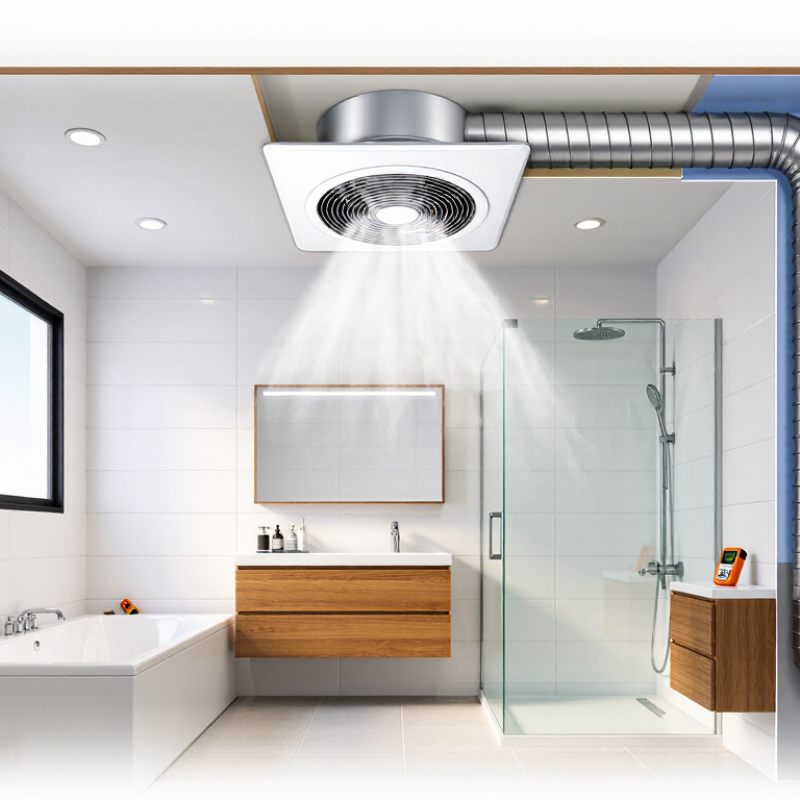
Bath ventilation fans differ in airflow design, noise control, and installation needs. Axial fans suit short, straight ducts and compact bathrooms. Centrifugal fans handle longer duct runs and higher resistance more effectively. Mixed-flow inline fans offer stronger airflow with flexible placement, often above ceilings or inside service areas.

Check airflow in cubic feet per minute, not only motor wattage. A suitable fan should remove moisture without creating excessive drafts. Noise is measured in sones; lower values usually improve comfort during nighttime use. Useful features include humidity sensors, timer controls, backdraft dampers, and washable grilles. In damp zones, installers should also verify the electrical protection rating and local installation requirements. Small details matter. A poorly sealed duct can waste much of the fan’s rated performance.

Tips: Measure the duct route before choosing the fan. Keep bends limited and use smooth, insulated ducting where possible. Test the fan after installation with a tissue near the grille; steady suction suggests reasonable airflow. This check is helpful, but it is not a substitute for professional commissioning. I have found that sensor settings can be too sensitive in real bathrooms, especially after hot showers. Adjustable humidity thresholds are worth considering. No single fan fits every room.

How to Evaluate Supplier Quality and Compliance

Top Bath Ventilation Fan Suppliers Worldwide

How to Evaluate Supplier Quality and Compliance

Evaluating a bath ventilation fan supplier requires more than comparing airflow figures. Request test reports showing air volume, noise levels, energy use, and motor performance. Check whether an independent laboratory issued these documents. Confirm that the tested model matches the production model.

Start with evidence. Ask for factory inspection records, incoming material checks, and final inspection procedures. A reliable supplier should trace motors, housings, and electrical parts by batch number. Review samples under realistic conditions, including a humid bathroom and a long operating cycle. Listen for rattling, inspect condensation control, and measure airflow at the outlet. Small details matter.

Compliance documents deserve careful review. Verify applicable electrical safety, electromagnetic compatibility, and environmental requirements for each target market. Do not accept a certificate with unclear model numbers or expired dates. Check installation instructions, warning labels, warranty terms, and spare-part availability. These documents often reveal how seriously a supplier manages risk.

A polished audit report can still miss daily production problems. Independent follow-up inspections reduce that blind spot. I would also compare three samples from different production batches, not just one perfect sample. Supplier communication is another practical test. Slow answers, vague tolerances, or changing specifications may signal weak control. My own evaluation would remain open to revision, because factory performance can change after the first order.

Pricing, Customization, Delivery, and After-Sales Support

Global bath ventilation fan suppliers compete on four practical factors: pricing, customization, delivery, and after-sales support. Pricing usually changes with airflow, noise level, humidity sensors, lighting, motor efficiency, and housing materials. The Home Ventilating Institute recommends at least 50 CFM for intermittent bathroom ventilation, or 20 CFM for continuous operation. A cheaper fan may fail this target.

Customization is valuable for hotels, apartments, and private-label projects. Buyers can request different voltage, duct sizes, control panels, colors, and packaging. Energy efficiency also affects long-term cost. The U.S. Department of Energy reports that efficient ventilation products can reduce electricity use while maintaining required airflow. However, I would not trust a specification sheet alone. Ask for airflow testing, noise data, safety certificates, and sample approval.

Tips: Compare total landed cost, not only the factory price. Request a written warranty, spare-part list, and response time for technical support. Delivery estimates should include production, inspection, customs, and inland transport. In my experience, a two-week promise can become five weeks when components are delayed. After-sales support should include installation guidance, troubleshooting videos, replacement motors, and clear claim procedures. The best supplier is not always the lowest bidder; reliability is often visible in documentation, communication, and consistent sample quality.