Leave Your Message
Choosing the right Local Exhaust Ventilation system is more than comparing prices and airflow figures. It is about controlling dust, fumes, vapors, and mist before they reach a worker’s breathing zone. A poorly positioned hood can leave a visible plume drifting across a workshop. A well-designed system captures the contaminant close to its source.
This guide reviews ten Local Exhaust Ventilation systems currently available for sale. It considers capture performance, fan capacity, filter design, noise, maintenance access, energy use, and installation flexibility. Options range from compact bench extractors to mobile units and larger fixed systems. Each choice serves a different working environment. A welding bay needs different protection from a woodworking shop or laboratory.
Occupational-hygiene expert Professor John Cherrie has often stressed this practical principle: “Exposure control should begin with the hazard, not the worker.” That idea remains important when evaluating equipment. Personal protective equipment may support control, but it should not hide weak extraction. Look for test points, airflow indicators, replaceable filters, and clear servicing instructions. Small details matter.
Still, product specifications do not tell the whole story. Real performance depends on hood placement, duct design, worker behavior, and regular testing. Even an expensive system can disappoint when installed carelessly. This ranking is therefore useful, but not absolute. Your process, room layout, contaminant type, and maintenance capacity should shape the final decision. Expect trade-offs, and question impressive claims.
Top 10 Local Exhaust Ventilation Systems for Sale?
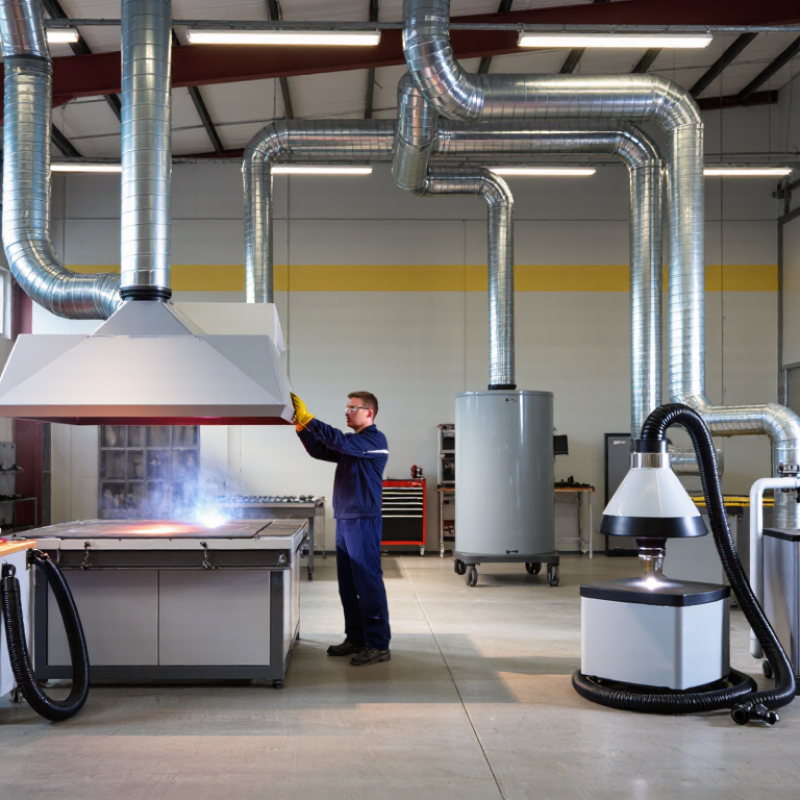
A local exhaust ventilation system, or LEV, captures dust, fumes, vapors, or mist near its source. It prevents contaminants from spreading through the worker’s breathing zone. A typical system includes a hood, ductwork, filter, fan, and discharge point. The U.S. OSHA Technical Manual identifies these components as essential parts of effective contaminant control.
Consider a grinding station. The hood should sit close to the wheel, not across the room. Airflow then carries metal particles into the duct before they reach the operator. HSE guidance HSG258 recommends checking capture performance, airflow indicators, filters, and duct condition. A clean-looking filter proves very little. Poor hood position can still create exposure.
The WHO and ILO estimated 1.9 million work-related deaths globally in 2016, including many respiratory diseases. Separately, the U.S. Bureau of Labor Statistics recorded about 2.6 million nonfatal workplace injuries and illnesses in private industry during 2023. These figures do not measure LEV performance directly. Still, they show why prevention deserves careful attention.
Tips: Compare systems by capture distance, airflow, noise, filter loading, and maintenance access. Request airflow test records, not only catalogue claims. Check the system under real working conditions. Small mistakes matter. A flexible hose may look convenient, yet bends can reduce airflow sharply. Overlooking that detail is easy, and regrettable.
A local exhaust ventilation (LEV) system captures dust, fumes, vapors, gases, mist, or heat at or near the point where they are generated and removes them before they spread into the workplace air. The specifications below represent typical commercial system configurations; actual requirements depend on the contaminant, process, capture position, duct design, and applicable regulations.
| Rank | LEV System Type | Typical Applications | Typical Airflow | Typical Capture Distance | Common Filtration | Key Advantages | Important Selection Considerations |
|---|---|---|---|---|---|---|---|
| 1 | Articulated Extraction Arm | Welding, laboratory work, adhesive use, soldering, and small manufacturing processes | 300–800 CFM (510–1,360 m³/h) |
6–18 in (150–450 mm) |
Particle filter, activated carbon, or combined filter | Flexible positioning and effective source capture | Arm reach, hood design, pressure loss, and operator positioning |
| 2 | Portable Filtration Extractor | Maintenance, repair areas, temporary welding stations, and mobile production work | 300–1,200 CFM (510–2,040 m³/h) |
6–24 in (150–600 mm) |
Pre-filter, fine-particle filter, HEPA, or carbon stage | Easy to relocate and generally quick to install | Filter loading, electrical supply, wheel stability, and noise |
| 3 | Downdraft Extraction Table | Grinding, deburring, sanding, cutting, and dusty bench operations | 800–2,500 CFM (1,360–4,250 m³/h) |
At the work surface | Spark-resistant pre-separation, cartridge filter, or dust collector | Captures contaminants away from the operator’s breathing zone | Table size, loading capacity, combustible-dust controls, and maintenance access |
| 4 | Backdraft Extraction Booth | Welding, plasma cutting, spray operations, and work producing fumes behind the component | 1,000–4,000 CFM (1,700–6,800 m³/h) |
Within the booth opening | Metal-mesh spark arrestor, cartridge filter, or wet collector | Provides a defined capture zone for larger workpieces | Booth depth, cross-drafts, workpiece size, and fire protection |
| 5 | Welding Fume Extraction System | Manual arc welding, robotic welding, and fabrication areas | 500–1,200 CFM (850–2,040 m³/h) per capture point |
6–12 in (150–300 mm) |
Spark arrestor and high-efficiency particulate filter | Designed specifically for smoke and fine metal particulate | Welding process, fume generation rate, spark control, and filter capacity |
| 6 | Wall-Mounted Extraction Hood | Fixed workstations, chemical handling, machining, and process equipment | 800–3,000 CFM (1,360–5,100 m³/h) |
6–24 in (150–600 mm) |
Particulate, chemical, or grease filtration as required | Saves floor space and suits permanent work areas | Hood overhang, cross-drafts, duct routing, and make-up air |
| 7 | Laboratory Fume Hood | Laboratory chemicals, sample preparation, testing, and small-scale experiments | 400–1,200 CFM (680–2,040 m³/h) |
Inside the hood enclosure | Ducted exhaust; carbon or specialty filters where appropriate | Encloses the process and reduces direct exposure risk | Face velocity, sash position, chemical compatibility, and exhaust discharge |
| 8 | Soldering and Electronics Fume Extractor | Hand soldering, rework, electronics assembly, and light adhesive applications | 100–300 CFM (170–510 m³/h) |
2–6 in (50–150 mm) |
Fine-particle filter with activated carbon | Compact, quiet, and suitable for bench-level source capture | Hood proximity, carbon capacity, airflow indication, and replacement filters |
| 9 | Canopy or Overhead Hood | Heat, steam, light dust, and rising contaminants from industrial processes | 1,500–6,000 CFM (2,550–10,200 m³/h) |
Directly above the source | Grease filter, mesh filter, or process-specific filtration | Covers broad areas and can handle rising heat or vapor | Not suitable for contaminants that pass through the breathing zone before rising |
| 10 | Central Multi-Point LEV System | Large workshops with several machines, benches, booths, or extraction arms | 2,000–20,000+ CFM (3,400–34,000+ m³/h) |
Depends on each hood | Cyclone, cartridge, bag, HEPA, wet scrubber, or carbon stages | Supports multiple extraction points with centralized maintenance | System balancing, simultaneous-use demand, duct velocity, fan sizing, and fire safety |
Note: CFM means cubic feet per minute. Airflow values are typical planning ranges, not universal design requirements. A qualified ventilation professional should evaluate the contaminant, exposure risk, capture velocity, duct resistance, discharge location, and applicable occupational-safety requirements before purchase or installation.