Leave Your Message

How to Choose the Right Dust Exhaust Fan?

Choosing a Dust Exhaust Fan is not just a matter of matching motor horsepower to a machine. The right choice starts with the dust itself: its particle size, temperature, moisture, and how quickly it enters the air. A sander may release a fine, steady haze. A hopper may produce brief, heavy bursts. Those differences affect airflow, duct design, and filter loading.

A practical takeaway from aerosol scientist David Leith’s work is: “Capture dust where it is created, and size airflow for the real process.” This is a plain-language summary, not a verbatim quotation. It points to a common mistake: selecting a fan by its advertised capacity alone. Check the required airflow at the hood, then account for resistance from ducts, bends, filters, and other system components. Small details matter. A tight elbow can change performance.

This guide explains how to compare fan types, estimate airflow needs, and review static pressure, materials, noise, and maintenance access. It also shows what to check before installation, including whether the hood captures dust without disrupting the task. There is no perfect shortcut. Even a carefully chosen fan can underperform if the hood sits too far from the source or the filter becomes clogged. That part is easy to overlook. Use the recommendations as a starting point, then verify performance under actual working conditions.

How to Choose the Right Dust Exhaust Fan?

Define the Dust Collection Task and Operating Conditions

How to Choose the Right Dust Exhaust Fan?
Define the Dust Collection Task and Operating Conditions

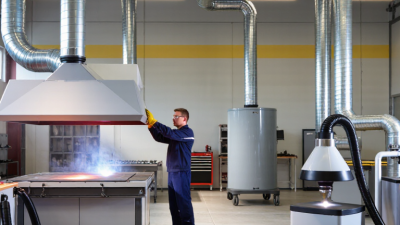
Start by describing what the fan must capture, where it must capture it, and how often it will run. A sanding station producing fine, dry dust needs a different collection approach from a process releasing heavier chips. Note the number of pickup points, their distance from the fan, and whether several machines run at once. Be specific. “Dusty workshop” is not enough information for sizing.

Operating conditions matter just as much. Record the dust’s temperature and moisture, the duct length, bends, and any filters or hoods that add resistance. These details affect airflow and static pressure, so a fan’s advertised airflow alone cannot predict performance. Check how long the system runs each day and whether the process changes between shifts. A first estimate is rarely perfect; revisit it after observing actual dust escape and filter loading.

Tips: Measure airflow near the pickup points, not only at the fan. Keep notes on filter condition and visible dust. Ask a qualified ventilation professional to assess unusual dust hazards and confirm the system design. Small leaks can undermine a careful calculation.
How to Choose the Right Dust Exhaust Fan: Define the Task and Operating Conditions

Start by identifying how dust is generated and how close the hood can be placed to the source. The chart shows typical capture-velocity guidance bands for different levels of contaminant release.

How to use this: These are preliminary guidance ranges, not universal fan-selection values. Actual airflow depends on hood design and distance, enclosure, cross-drafts, duct layout, and system losses. Confirm the final design for the specific process. Velocity ranges are representative of commonly used industrial ventilation guidance.

Assess Dust Properties and Required Airflow

Start by identifying what the dust is like, not just how much it weighs. Fine, dry powder behaves differently from damp chips or heavy abrasive particles. Note particle size, moisture, temperature, and how quickly dust is produced. A small cloud released during sanding may need strong capture close to the tool. Larger chips may settle before reaching a distant hood. Look at the actual process.

Then estimate the airflow needed at the pickup point. Hood shape and distance matter: a wide opening several inches from a cutting edge can lose dust control quickly. Measure the opening and keep it close to the source where practical. The fan must also overcome resistance from duct length, bends, filters, and collected debris. A fan’s free-air rating alone does not show its airflow in an installed system.

Watch what happens during normal work. Dust escaping around a hood, settling on nearby surfaces, or building up in a filter can signal that the setup needs review. A rough estimate can help, but it is still a guess. Real workshops are rarely as tidy as the calculation. For uncertain or potentially hazardous dust, ask a qualified ventilation professional to assess the material and system.

How to Choose the Right Dust Exhaust Fan? – Assess Dust Properties and Required Airflow

Dust or Process Typical Dust Properties Preliminary Hood Face-Velocity Range Example Airflow for a 4 ft² Hood Opening Selection Considerations
Fine sanding or woodworking dust Light particles can remain airborne and spread beyond the immediate work area. 100–150 ft/min (0.51–0.76 m/s) 400–600 CFM (680–1,020 m³/h) Capture dust close to the tool. Account for duct losses, filter loading, and the number of machines operating at the same time.
Coarse wood chips and sawdust Larger, heavier particles; chips may settle or accumulate in horizontal duct runs. 75–125 ft/min (0.38–0.64 m/s) 300–500 CFM (510–850 m³/h) Use a hood positioned near the discharge point and check that the duct system can convey the heavier material without buildup.
Grain, flour, or other food-processing dust Often fine and easily dispersed; some organic dusts can form combustible dust clouds. 100–150 ft/min (0.51–0.76 m/s) 400–600 CFM (680–1,020 m³/h) Consider dust-hazard assessment, suitable filtration, housekeeping, and applicable combustible-dust protection requirements.
Cement, lime, or mineral powder handling Fine, abrasive particles; some materials can be irritating or harmful when inhaled. 125–200 ft/min (0.64–1.02 m/s) 500–800 CFM (850–1,360 m³/h) Provide effective source enclosure and select wear-resistant components where abrasion is significant. Confirm filter compatibility with the dust.
Grinding or abrasive finishing Dust may be generated at high speed and can include heavier particles or sparks. 150–250 ft/min (0.76–1.27 m/s) 600–1,000 CFM (1,020–1,700 m³/h) Keep the hood close to the grinding zone. Evaluate spark control, fire risk, duct layout, and the required airflow for each operating station.
Welding fume and very fine process particulate Fine airborne particles can travel with thermal currents and escape a poorly positioned hood. 100–200 ft/min (0.51–1.02 m/s) 400–800 CFM (680–1,360 m³/h) Use local capture near the source without pulling contaminants through the worker’s breathing zone. Hood geometry and distance strongly affect performance.

How to use these preliminary values: For an enclosed or partially enclosed hood, estimate airflow with Q = face velocity × open hood area. The example column assumes a 4 ft² opening; actual airflow must be adjusted for hood design, source distance, duct resistance, fittings, filters, and simultaneous operating points. External capture hoods require a design method that accounts for hood shape and distance from the dust source. Confirm final airflow and fan static pressure with a qualified ventilation professional, and assess combustible or hazardous dust separately.

Compare Fan Types, Pressure, and Performance

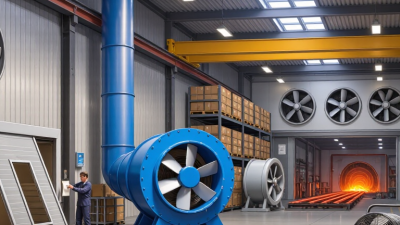
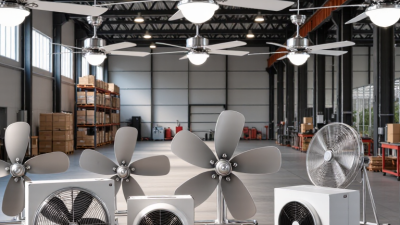
Axial and centrifugal fans move air differently, so the right choice depends on the dust system. Axial fans push air along the shaft and suit short, relatively open duct runs. Centrifugal fans turn airflow through an impeller, often handling higher resistance from filters, bends, and long ducts. That matters.

Pressure is not a secondary detail. A fan may show strong airflow in open air but deliver much less once connected to a filter and ductwork. Check the fan curve against the system’s estimated static pressure, then find the operating point where the two meet. Include dirty-filter conditions, not just a clean new filter. Otherwise, performance may disappoint.

Compare airflow at the required pressure, not maximum airflow alone. Also consider dust load, particle size, abrasion, and how often the system runs. A workshop with a compact pickup hood may need a different fan from a central collector serving several machines. A common mistake is choosing by motor power; a larger motor cannot fix a poor fan match. I would also leave room for uncertainty: real ducts rarely match drawings perfectly. Measure airflow after installation and adjust dampers or duct layout when needed.

Check Construction Materials and Safety Requirements

A dust exhaust fan must match the material it handles, not just the airflow figure on its data sheet. Fine wood dust, metal particles, and damp process dust can wear or affect components differently. Check the housing, impeller, and fasteners for suitable corrosion and abrasion resistance. A thin coating may look convincing, but it can hide weak construction underneath.

Look closely at the impeller. Its shape and material should suit the dust’s weight, temperature, and abrasiveness. Ask how the fan handles particle buildup and how safely workers can inspect or clean it. Access matters. A cramped panel can turn routine maintenance into a rushed job. I would also verify that seals, bearings, and drive components are protected from dust where needed. Small details count.

Safety requirements depend on the dust and the installation. Confirm the operating temperature range, motor suitability, guarding, and grounding arrangements with a qualified engineer. If dust could create a fire or explosion hazard, use equipment designed and assessed for that specific risk; an ordinary fan is not a safe substitute. Keep maintenance instructions available, and check that inspection points are reachable without removing essential guards. One detail is easy to miss: the fan may be suitable, while nearby ductwork or connections are not. Recheck the whole assembly before installation.

Plan Installation, Controls, and Maintenance

How to Choose the Right Dust Exhaust Fan? Plan Installation, Controls, and Maintenance

Start with the dust, not the fan catalog. Confirm particle size, moisture, temperature, and whether the material can burn. Then calculate required airflow and static pressure, including losses across ducts, bends, hoods, and filters. A fan that moves plenty of air in open space may underperform once connected to a long, narrow duct.

The U.S. Chemical Safety Board’s 2006 Combustible Dust Hazard Study documented 281 dust fire and explosion incidents from 1980 to 2005, with 119 deaths and 718 injuries. Those figures concern dust incidents broadly, not fan failures, but they underline why system design deserves careful review.

Small details matter. Place the fan and collector according to the engineered system, and provide safe access for inspection.

Set controls to prove the system is working. Interlock extraction with the process where appropriate, and use airflow or pressure indicators to flag blocked filters, open access doors, or failing belts. A variable-speed drive can help match demand, but lowering speed without checking capture velocity may let dust escape at the hood.

Maintenance should include scheduled checks for impeller buildup, vibration, bearing noise, belt tension, filter condition, and duct leaks. Record readings so gradual changes are visible. There is no universal inspection interval; dust behavior and operating hours vary, and a neat checklist can still miss a poor measurement. Ask a qualified ventilation professional to verify performance after installation and after major process changes.