Leave Your Message
Choosing a Heat Recovery Ventilator manufacturer in 2026 means looking beyond a headline efficiency figure. A unit may perform well in a laboratory yet disappoint in a quiet bedroom if its fans are noisy or its controls are confusing. Installation matters, too. Poor duct design can undermine otherwise capable equipment.
Building-science expert Joe Lstiburek is widely associated with the phrase, “Buildings don’t need to breathe, people do.” It captures an important point: ventilation should provide fresh air while limiting avoidable heat loss. An HRV transfers heat between outgoing and incoming air, but real performance depends on climate, maintenance, commissioning, and how the home is used. Real homes vary. That complicates comparisons.
This guide to the Best Heat Recovery Ventilator Manufacturers 2026 considers practical factors, including verified heat-recovery performance, frost protection, sound levels, filter access, controls, warranty support, and regional service availability. Buyers should also check whether product claims use comparable test conditions. Not always. Specifications alone cannot show how responsive a manufacturer will be when parts are needed or a system requires adjustment. We will compare manufacturers, while recognizing that a strong choice for a cold, large home may not suit a compact apartment. That remains a limitation of any broad ranking—and a reason to check local requirements and qualified installer advice before deciding.
Best Heat Recovery Ventilator Manufacturers 2026
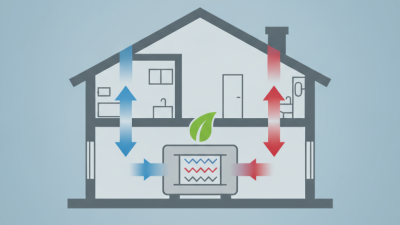
A heat recovery ventilator (HRV) brings outdoor air into a building while exhausting stale indoor air. Inside its core, separate air streams pass across thin plates without mixing. Heat moves through the plates: winter exhaust warms incoming air; summer exhaust can temper incoming air. That is the exchange. Unlike a typical energy recovery ventilator, an HRV transfers sensible heat, not water vapor. The U.S. Department of Energy’s Energy Saver guidance says ERVs can recover about 70–80% of exhaust-air energy. This broad figure is not a guaranteed HRV rating. Actual performance depends on airflow balance, frost control, filters, and installation.
ASHRAE Standard 84-2020 specifies laboratory test methods for air-to-air heat and energy exchangers, helping buyers compare measured performance. Check the test conditions, not only the headline efficiency. On a 0°C morning, warm exhaust air can preheat outdoor air before it reaches bedrooms. The supply air still needs careful distribution; an HRV does not replace source control for cooking pollutants or indoor moisture. Filters collect dust, and frost protection may reduce heat recovery during very cold weather. Real homes are messier.
| Topic | What It Means | How It Works or What to Check | Why It Matters |
|---|---|---|---|
| Heat recovery ventilator (HRV) | A mechanical ventilation unit that transfers heat between outgoing indoor air and incoming outdoor air. | Two separate air streams pass through a heat-exchange core. The streams exchange heat without being intentionally mixed. | It provides outdoor air while recovering some heat that would otherwise leave with exhaust air. |
| Supply air stream | Fresh outdoor air delivered to occupied rooms. | A fan draws outdoor air through the unit and its filters, then sends it through the supply ductwork. | Correct airflow and distribution help provide ventilation where people spend time. |
| Exhaust air stream | Stale indoor air removed from rooms such as bathrooms, kitchens, and utility spaces. | A separate fan moves indoor air through the heat-exchange core before discharging it outdoors. | Balanced supply and exhaust airflow supports planned ventilation and helps limit unwanted pressure differences. |
| Heat-exchange core | The component that transfers heat between the two air streams. | Core designs and materials vary. Airflow paths remain separated in a properly functioning unit, while heat passes through the exchange surface. | Core design affects heat transfer, pressure drop, maintenance needs, and the unit's overall performance. |
| HRV versus ERV | An HRV primarily transfers sensible heat. An energy recovery ventilator (ERV) can transfer heat and some moisture. | Check the product documentation to confirm whether the unit is an HRV or ERV and which performance ratings apply. | Moisture transfer can influence indoor humidity, so the appropriate type depends on climate, building conditions, and ventilation requirements. |
| Heat-recovery performance | A measure of how effectively a unit transfers heat under specified test conditions. | Compare published ratings only when the test method, airflow, temperature conditions, and rating definitions are comparable. | A rating from one test condition should not be assumed to represent performance in every climate or installation. |
| Airflow capacity | The volume of air a ventilator can move at a stated operating condition. | Compare supply and exhaust airflow at the external static pressure expected in the duct system—not only at free-air conditions. | Actual airflow depends on duct design, filters, grilles, and system resistance. |
| Fan energy and sound | Electrical consumption and noise associated with moving air through the ventilator. | Review fan power and sound data at operating points relevant to the intended airflow and installation location. | These factors affect operating costs, comfort, and where the unit can reasonably be installed. |
| Filtration and maintenance | Filters capture some airborne particles and protect the equipment from dust buildup. | Check filter availability, replacement intervals, access for cleaning, and the manufacturer's maintenance instructions. | Dirty filters can restrict airflow and increase fan effort; filtration performance varies by filter type. |
| Cold-weather operation | Low outdoor temperatures can cause frost to form in parts of an HRV core. | Units may use different frost-control strategies, such as defrost cycles or preheating. Confirm the specified operating range and strategy. | Frost control can affect ventilation continuity, energy use, and airflow balance in cold conditions. |
| Condensate drainage | Water may form as warm, humid exhaust air cools inside the unit. | Check whether the installation requires a drain connection, trap, or other measures specified in the installation instructions. | Correct drainage helps prevent water accumulation and related maintenance problems. |
| Manufacturer evaluation for 2026 | A comparison should focus on verifiable product and support information rather than brand claims alone. | Review independently comparable performance data, available sizes, controls, frost protection, documentation, warranty terms, parts availability, and local service support. | Suitability depends on the building, climate, ventilation design, installation quality, and long-term service access. |