2026 Top Centrifugal Pump Types for Efficient Fluid Control?
In industries relying on efficient fluid control, centrifugal pumps play a critical role. According to a report by MarketsandMarkets, the global centrifugal pump market is projected to reach USD 45.31 billion by 2027, driven by increased industrial demand and the need for improved efficiency. These pumps are favored for their reliability and adaptability in various settings, including water, chemical, and oil industries.
However, not all centrifugal pumps are created equal. The selection of the right type can significantly influence operational performance and maintenance costs. Recent studies indicate that many facilities overlook the importance of pump selection, leading to inefficiencies. For example, improperly sized pumps can result in energy losses of up to 30%, as noted by the Pump Systems Matter initiative. This highlights the necessity of understanding different centrifugal pump types to optimize fluid management and energy consumption.
Choosing the most efficient centrifugal pump requires an understanding of specific applications and operating conditions. Each type possesses unique features that may suit particular industrial processes. The challenge lies in navigating this complexity to make informed decisions that enhance performance and reduce waste. As industries evolve, so too must our approach to fluid control solutions.
Overview of Centrifugal Pumps and Their Applications
Centrifugal pumps are essential devices in fluid management. They operate by converting rotational energy from a motor into kinetic energy in the fluid. This process creates a flow, moving liquids through a system efficiently. Different centrifugal pump types cater to various applications, such as water supply, wastewater treatment, and industrial processes.
Each pump type offers specific advantages and efficiencies. For instance, some pumps excel in high-efficiency requirements, while others perform well under variable conditions. It's crucial to consider the fluid characteristics, flow rate, and pressure needs when selecting a pump. Many users overlook vital factors, leading to suboptimal performance. The right pump can significantly enhance operational efficiency, reducing energy consumption and maintenance costs.
Despite the benefits, challenges exist in centrifugal pump operation. Users must regularly monitor wear and maintenance needs to avoid downtime. Variations in fluid properties can impact performance. Making informed decisions about pump type and maintenance strategies is necessary for long-term success in fluid control applications.
2026 Top Centrifugal Pump Types for Efficient Fluid Control
| Pump Type |
Application |
Flow Rate (GPM) |
Head (ft) |
Efficiency (%) |
| Single-Stage |
Water Supply |
50-500 |
20-150 |
75 |
| Multi-Stage |
High Pressure Applications |
100-2000 |
100-500 |
85 |
| Self-Priming |
Wastewater |
30-400 |
10-100 |
70 |
| Chemical Process |
Chemical Transfer |
40-500 |
20-150 |
80 |
| Submersible |
Deep Well Water Extraction |
20-300 |
50-400 |
78 |
Types of Centrifugal Pumps: A Comprehensive Classification
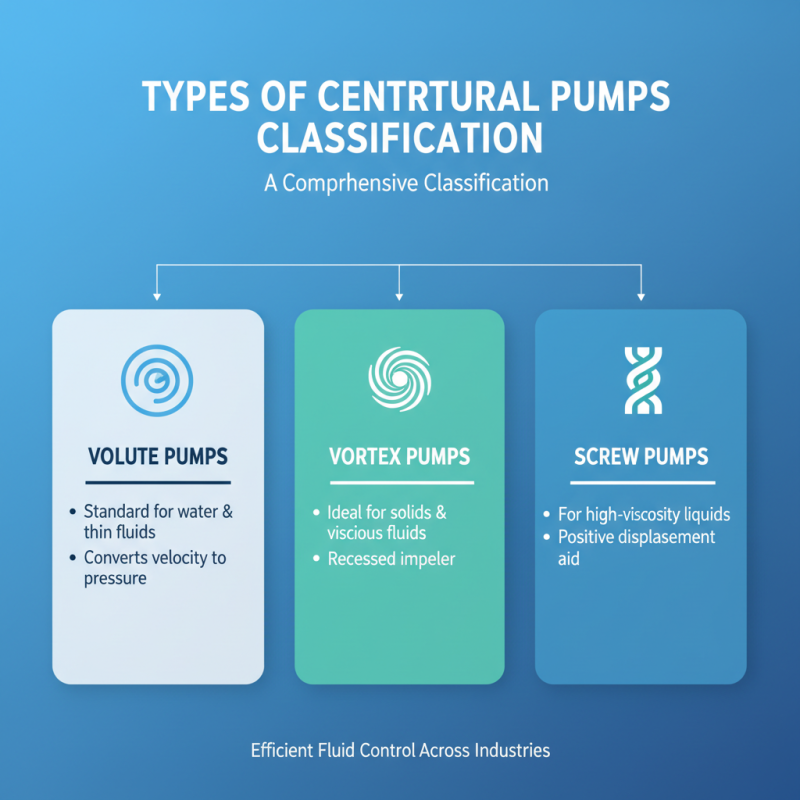
Centrifugal pumps are crucial for efficient fluid control across various industries. Their design allows for increased flow rates, making them a top choice for many applications. The primary types of centrifugal pumps include volute, vortex, and screw pumps. Each type has distinct characteristics that determine its effectiveness based on fluid properties and operational conditions.
Volute pumps possess a spiral casing that directs the flow, optimizing efficiency. Vortex pumps, on the other hand, are adept at handling solids in suspension. Screw pumps excel in pumping viscous fluids, essential in sectors like food processing and oil extraction. According to the Hydraulic Institute, nearly 80% of all pumps in industrial applications are centrifugal. This statistic highlights their widespread use and the importance of selecting the right type.
**Tip:** Always assess the fluid's viscosity and temperature before choosing a centrifugal pump type. Incorrect selection can lead to operational inefficiencies and increased wear.
Despite their advantages, centrifugal pumps can face challenges. Cavitation is a common issue, leading to damage over time. Users should monitor suction conditions to prevent this. Additionally, maintenance practices could be improved across the industry, as neglect may result in significant downtimes.
**Tip:** Regular inspections can significantly enhance pump lifespan. Simple steps like checking seals and bearings create a more reliable performance.
Key Features and Benefits of Modern Centrifugal Pumps
Centrifugal pumps have become essential in various industries due to their efficiency and versatility. They are designed to move fluids effectively, making them vital for applications in water treatment, chemical processing, and HVAC systems. Modern centrifugal pumps come with advanced features, enhancing their performance and reliability.
One key feature of these pumps is energy efficiency. Many modern designs incorporate innovative materials and technologies that reduce power consumption. This translates to lower operational costs and less environmental impact. Additionally, the use of variable frequency drives (VFDs) allows for precise control over flow rates, adapting to specific needs while optimizing energy use.
Tips: Regular maintenance is crucial for optimal performance. Check seals and bearings frequently to prevent leaks. The installation of monitoring systems can provide real-time data, ensuring that any issues are quickly addressed.
Another important benefit is their ability to handle different fluid types. From viscous liquids to abrasive slurries, centrifugal pumps can be configured to manage various materials. However, ensuring compatibility between the pump materials and the fluid is essential to avoid wear and tear over time.
Tips: Pay attention to the pump's material specifications. Using a pump not suited for the fluid type can lead to inefficiencies and damage. Understanding the specific application can guide you in choosing the right pump type.
2026 Top Centrifugal Pump Types for Efficient Fluid Control
This chart illustrates the key features and benefits of various types of centrifugal pumps based on their efficiency ratings in fluid control applications.
Factors Influencing the Efficiency of Centrifugal Pumps
Centrifugal pumps are essential in many industries. Their efficiency directly impacts fluid control. Several factors determine how well they operate. Understanding these factors can lead to better performance and reduced costs.
One significant aspect is the design of the impeller. Impeller shape and size affect fluid flow rates. A well-designed impeller can enhance efficiency. Materials also play a crucial role. Both corrosion resistance and wear can influence longevity. Regular maintenance is necessary to maximize performance. Neglecting this can lead to inefficiencies.
Operating conditions are another critical factor. Changes in viscosity and temperature can alter fluid behavior. These variables must be carefully monitored. Conducting regular assessments can help pinpoint flaws in the system. Awareness of these influences is key for optimal pump operation. Efficient fluid control largely depends on recognizing these complexities.
Innovations in Centrifugal Pump Technology for 2026
Innovations in centrifugal pump technology for 2026 promise to enhance fluid control efficiency significantly. Manufacturers are focusing on advanced materials and designs. These changes lead to increased durability and performance. Additionally, smart technology integration is becoming more common.
Sensors can monitor pump performance in real-time. This feedback loop enhances operational efficiency and reduces downtime.
Consider the potential of variable frequency drives (VFDs). They allow for precise control over pump speed. This means less energy waste and tailored fluid flow rates. Operators can adjust to changing system demands quickly. However, users must ensure proper training for effective implementation.
When selecting a pump, consider compatibility with existing systems. Not every innovative feature may suit specific applications. Users should also anticipate maintenance needs associated with new technologies. Regular training can help your team stay updated on advancements. Embracing technology requires a balance between innovation and practicality.