How to Choose the Right Bath Exhaust Fan for Your Home?
Choosing the right Bath Exhaust Fan is essential for any home. A good fan ensures proper ventilation, reducing humidity in your bathroom. Excess moisture can lead to mold and mildew, creating health risks.
When selecting a Bath Exhaust Fan, consider the size of your bathroom. An oversized fan can be noisy and waste energy. Conversely, a fan that is too small may not effectively remove moisture. Look for features like noise ratings and energy efficiency.
Many people overlook the importance of a quality fan. It's easy to make a quick purchase without proper research. However, investing time in understanding your options will pay off. You'll achieve a cleaner, healthier space. Choosing wisely can also avoid common regrets later. Reflect on your needs carefully before making a decision.
Understanding the Importance of Bath Exhaust Fans in Home Ventilation
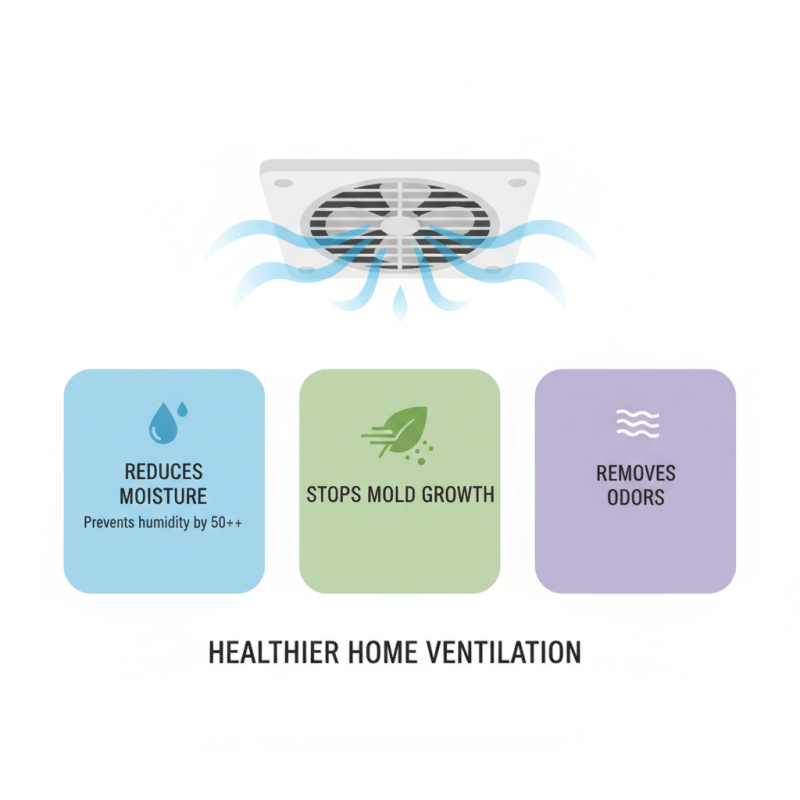
Bath exhaust fans play a critical role in home ventilation. They help remove moisture and unpleasant odors from bathrooms. According to a report by the U.S. Department of Energy, proper ventilation significantly reduces the risk of mold growth. Mold thrives in damp conditions, and bathrooms are prone to high humidity. An efficient exhaust fan can lower humidity levels by more than 50% in just a few minutes.
Choosing the right bath exhaust fan is essential for effective ventilation. A fan should ideally exchange air in the bathroom 8 times per hour. The Home Ventilating Institute states that an exhaust fan with adequate cubic feet per minute (CFM) rating is key to achieving this. However, some homeowners may underestimate the fan's importance. They often select based on cost rather than performance. This could lead to insufficient ventilation and lingering moisture, potentially harming the home’s air quality.
While modern exhaust fans come with various features, not all achieve optimal performance. Some fans can be loud, which discourages consistent use. Others may not have enough power. A poorly chosen fan not only fails to improve air quality but can also lead to higher energy costs. Homeowners need to reflect on their choices and seek a balance between efficiency and noise levels when selecting an exhaust fan.
Key Features to Consider When Selecting a Bath Exhaust Fan
When selecting a bath exhaust fan, several key features should be prioritized. Noise level is critical. Fans are rated in sones. A quiet fan should stay below 2.0 sones. According to the Home Ventilating Institute, a noisy fan can disrupt your peace.
CFM, or cubic feet per minute, measures airflow. The right CFM ensures effective moisture removal. An average bath requires about 1 CFM per square foot. For example, a 100-square-foot bathroom needs a fan with about 100 CFM. Choosing one that meets this criteria ensures the air remains clear and dry.
Energy efficiency also matters. Look for ENERGY STAR rated fans. These use less energy while delivering adequate ventilation. A study by the Department of Energy found that energy-efficient models can save you significant costs over time. Remember the duct size too. A properly sized duct improves performance. The wrong size can lead to back pressure and reduced efficiency. Consider these factors carefully to maximize your home's comfort and maintain air quality.
Calculating the Appropriate CFM for Your Bathroom Size
When choosing the right bath exhaust fan, understanding CFM is essential. CFM stands for cubic feet per minute. It measures the fan's airflow capacity. To maintain optimal air circulation, you’ll need to calculate how much airflow your bathroom requires based on its size.
To determine the appropriate CFM, measure your bathroom's square footage. A general rule is to use 1 CFM for every square foot of space. For instance, if your bathroom is 100 square feet, you’ll want a fan rated for at least 100 CFM. However, consider your bathroom's height. If it has high ceilings, you may need a more powerful fan.
Tips: Don't overlook dampness. Excess moisture leads to mold and mildew. Fans with humidity sensors can be beneficial. Also, consider noise levels. Loud fans can be distracting. Look for models rated under 0.5 sones for quieter operation. Balancing CFM and noise can be tricky. Always measure your space accurately. Sometimes, the most discounted option isn’t what you need. Reassess your priorities before making a decision.
Types of Bath Exhaust Fans: Which One is Right for You?
Choosing the right bath exhaust fan can significantly impact your home’s air quality. There are several types available. The most common are ceiling-mounted and wall-mounted fans. Ceiling models work well in larger bathrooms with lots of moisture. Meanwhile, wall-mounted units are often easier to install and maintain.
Noise levels vary across different models. Some fans operate at a whisper, around 0.5 sones. Others can be as loud as 4.0 sones. The quieter the fan, the more you'll enjoy your space. A report by the Home Ventilating Institute indicates that 70% of homeowners choose quieter models for comfort.
Tip: When selecting a fan, consider both size and CFM (Cubic Feet per Minute). A fan should deliver at least 1 CFM per square foot of space. If your bathroom is 100 square feet, opt for a fan with at least 100 CFM.
Energy efficiency is also essential. Look for ENERGY STAR-rated fans, as they use about 50% less energy than standard models. Not everyone considers this initially. You may regret a decision made in haste. Longevity and cost savings matter over time. Close attention to these factors can improve your overall satisfaction.
How to Choose the Right Bath Exhaust Fan for Your Home? - Types of Bath Exhaust Fans: Which One is Right for You?
| Type of Bath Exhaust Fan |
Airflow (CFM) |
Noise Level (Sones) |
Installation Type |
Best For |
| Ceiling-Mounted Exhaust Fan |
50-110 CFM |
1.0-3.0 Sones |
Ceiling |
Standard Bathrooms |
| Wall-Mounted Exhaust Fan |
50-150 CFM |
1.5-4.0 Sones |
Wall |
Small or Unvented Bathrooms |
| Inline Fan |
100-300 CFM |
0.3-2.5 Sones |
Ducted |
Larger Bathrooms |
| Heat and Vent Combination Fan |
70-150 CFM |
1.0-3.5 Sones |
Ceiling |
Cold Climates |
| Smart Exhaust Fan |
80-150 CFM |
0.5-2.0 Sones |
Ceiling |
Tech-Savvy Homes |
Installation Considerations and Maintenance Tips for Bath Exhaust Fans
When installing a bath exhaust fan, consider the fan's location. It should be close to the shower or bathtub for maximum efficiency. Proper venting is also essential. Connect the fan to an outside vent. This helps remove moisture effectively. If there’s no direct exit, the fan becomes less useful. The ductwork must be straight and as short as possible.
Regular maintenance is crucial for your fan's longevity. Clean the fan cover every few months to remove dust and lint. Dust can accumulate quickly. Check the fan's motor and replace it if it starts making strange noises. You might find that some tasks go neglected over time. That's okay, just set reminders. Change the fan light bulb when it burns out. A functional light is often overlooked.
Having a reliable fan is an investment in your home’s health. It helps prevent mold and keeps the air fresh. However, many people forget about these small details. Don't overlook them. Think about how your choices impact air quality. A little effort on maintenance goes a long way. Always reflect on what could be improved next time.
Bathtub Exhaust Fan Noise Levels Comparison